Using teacher administrative tasks can help to be more organized in the field of education. Alan November says, " Building stronger collaborative ties between educators, students, and their families requires a communication infrastructure that links every teacher and every family to the internet(23)." This helps as you can put the calendar on to a teacher blog of events to inform parents of events that are going on in the classroom. In this blog assignment, I focused more on how to be organized as a teacher with time management.
My philosophy is teachers need to be organized to do their job well and be successful in the field of making a difference in a child's life. If the teacher isn't organized they can feel overwhelmed. Using an organization app can help to make life easier for a teacher. I decided to learn how to use the Family Shared Calendar app, also called the FamCal app. I looked up ways organization apps could help me. It is very important as an educator to organize time management and schedule. Teachers have the stress of lesson plans, meetings, parent communication, workshops, second jobs and all the life responsibilities outside of the classroom, along with self-care of finding time to exercise. My classroom problem is staying organized as a busy teacher.
For my personal use, I feel I need to work on time management and organization to not be so overwhelmed with tasks, juggling a second job and graduate school. The app I tried to use was FamCal.
Here is the visual of the FamCal app in my phone.
Using applications for organizing calendars, to do lists and plugging in times to do certain tasks is good for Administrators and teachers to use to stay organized with their teaching load or personal tasks. The teacher could also use this app to write a separate calendar for curriculum themes. Students could use the calendar apps to balance their homework time and sports activities.
The apps can help with organizing with coworkers what tasks need to be done in the teaching setting or just being more organized can help a teacher to be less stressed about all they need to juggle in all aspects of life.My boss at the Beverly YMCA Kids club uses the app Sling that keeps track of filling in coverage for staffing. My boss at the Jewish Community Center uses outlook from her email to stay organized. Another teacher friend says she uses her phone calendar and planning book. The school principal she works for used google calendar. A past childcare boss uses the basic calendar app on her phone. My coworker at the Jewish Community Center told me about the FamCal app as she says it helps to collaborate for her, her husband and her children’s schedules to stay organized. Some of the other apps I tried out are Google Calendar, Remember the Milk and TimeTree. I think the one that I prefer the best is FamCal.
While using the FamCal app, I felt the whole visual calendar was good to put the events that I need to do daily and monthly. This app helps me to have everything on my phone instead of using a paper calendar.
The app can give you an overview of the weekly schedule.
.
The daily agenda is good to see the events visually by day and time.
The memos part of the app is good if you need to remember to do a task.
The To- Do List on the FamCal app reminds you to do tasks. For example, my focus is on making lesson plans or grad school work, but if time allows, it is important to add in chores or errands or time to relax.
The shopping list can remind you to buy supplies for your classroom or regular grocery shopping for a teacher's personal needs.
I am going to use the FamCal app to try to organize what I need to do daily, weekly and monthly to not be as overwhelmed with time management. This type of technology can be helpful for a teacher. I tried the Remember the Milk app and thought it was good at first for lists, but then I decided the FamCal app looked easier to use.
The Timetree app I felt needed more than just the calendar and I could not figure out the rest of the ways to use it.
Here is the screen shot of how I can keep track of my YMCA kids club schedule while using the Sling app, but I can also plug in my work schedule for both the YMCA and the Jewish Community Center into the FamCal app.
I may want to explore Microsoft Outlook or the Calm app in the future. We discussed both in class for help with some more organization skills and ways to be calmer as a teacher in the classroom.
I like the age group, I currently teach which are toddlers and preschool but my model classroom is based on wanting to teach in a Kindergarten classroom. I want to learn more about teaching older children in an elementary setting by taking these graduate classes. I dream of someday being a licensed teacher in a Kindergarten classroom
: I was curious to learn more about the content students should know in Kindergarten and checked out the older addition of this book out of the Gordon Library.
Then I looked up the sources such as what is kindergarten, who came up with it, the benefits, and asked my friend, Mary who is a kindergarten teacher about technology apps about technology. I also asked my other teacher educator friend Mrs. Schug about what kind of technology kindergarten students use in the classroom.
This article states the definition of kindergarten and who researched the idea.
"Friedrich Froebel, a German educator, established a school in Blankenburg, Germany in 1837. Froebel characterized the children in his school as plants and the teachers as the gardeners. "
In my model classroom, I would have the children own their learning by asking to learn about subjects they are interested in. I want the students to ask and explore questions and feel their learning has a purpose.
According to Alan November’s Who Owns the Learning, "Students take on the role of contributor and content provider, teachers become mentors who help guide the process and drive home the lessons it teaches” (8). This is a good reminder that I am a mentor and guide students in their learning.
I want the students to use the technology in the classroom like the book compares to a digital learning farm. The younger generation is surrounded by technology and knows how to use it faster than we do at our fingertips. I would start my year by sending out a parent newsletter about why technology is so important in my classroom. It would explain why I am using technology in the classroom, what the children are learning, and how it helps in society to be aware of what is going on around us. There may be a problem that parents will not understand or want their children learning with technology. I will be using technology to solve problems to help children learn and find a solution.
.
I am going to do my WAP practical's apps on the research about how to use technology to teach in a Kindergarten classroom. For my app practical's. I am using Kindergarten children I know through friends. I had to start my research by asking a friend at North Beverly Elementary School questions. I had no idea what kind of technology the Kindergarten students use. I learned their classroom is set up with fourteen iPads and has twenty-one students.
Here is a photo of the iPads
Each child has their own cubbies to put materials in.
There are tables of five to do group work.
The students will learn with technology apps on the smartboard and with hands-on learning activities on paper.
Here is a picture of the smart board, calendar, and a pumpkin art activity.
Description of my Model Classroom
My dream model classroom would have twenty-one kindergarten students. The students would be five and six years old. I would be the lead teacher and teach all subjects and try to incorporate technology in all curriculum domains. The curriculum would be hands-on and engaging. The students would learn with differentiated instruction and by their individual needs.
In the beginning of the year, the children would learn about each other by bringing stuff from home for show and tell. The students would go over classroom rules by writing them down using technology. The teacher’s lessons will be hands-on with technology and the children may get brain breaks by using the smartboard to move. The students will learn education concepts and dance to educational songs to learn about various academic subjects. I asked my friend who is a kindergarten teacher and she says she uses YouTube tips such as Jack Hartman on the smartboard.
Here is the information on Jack Hartman
https://www.youtube.com/watch?v=rjmKJKG5Nx0
Morning meeting on the smartboard and guided reading
Here are some videos on what students learned in kindergarten on the smartboard such as word families.
GoNoodle® engages 14 million kids every month with movement and mindfulness videos created by child development experts. Available for free at school, home, and everywhere kids are!
The students will learn with reading area, smart board, using an iPad with apps such as drawing apps, see saw app and books loaded on the technology. The students will use hands on learning techniques such as manipulatives, art projects, music, worksheets and individualized instruction in technology while exploring computers apps, writing their own stories, scribing, and doing their own research. They will learn how to be a global community by learning about other cultures and how to show empathy. The children would learn about different music or by using Skype or having pen pals. We would also plan community projects such as singing at a nursing home, picking up litter or doing a fundraiser to help an important cause and visiting and learning about community helpers. I would have the students write about technology in their classroom or draw a picture by using scribing.
Some independent apps my teacher friend told me about are, Lexia and St Math
Connect families to see student work and celebrate progress. Up to ten family members can stay in the loop using the Parent and Family app (iOS, Android) or on web
Bouncy Ball app can be fun to play with to talk about the noise level. The visual would work on the smartboard best.
Meeting Individual needs of Children in my Model Classroom
I may have two or three children in my class that would need teaching accommodations. The students may have a learning disability such as sensory processing or Autism. I would have a paraprofessional in the classroom to assist and also have these children be able to go to academic support to have their needs met. These children would get extra help in computer technology with a one-on-one. I would use Universal design for each child's learning style. Some may need to listen to audios of the story on the computer, or touch the computer screen. For the children with autism or sensory processing challenges, there would be a separate teacher working with the child and giving extra computer help.
My classroom may also have two English Language Learners. The ELL students need to have visuals and individual help. The teacher would give ELL learners the reading or video ahead of time, have a peer buddy for group work and have someone help scaffold in the native language. I would also need to try and learn the language.
In my school it would not be an issue of ethnic background and everyone would be accepted. In my curriculum, I would teach acceptance for all and have the children bring in the food from their culture. I would start my year off talking about cultural diversity and how to accept everyone no matter their culture, race, or religion as we are all one melting pot in the United States. The culture, race and religion of different people could be incorporated into the Technology curriculum. The children could do individual research on diversity and different cultures and also write individual stories about themselves by typing on the computer.
A sample of curriculum sent home to parents about kindergarten
In conclusion, I want to follow my own teaching philosophy and I love this quote from Mustafa Kemal Atatürk,“A good teacher is like a candle—it consumes itself to light the way for others.”
Also this is very important for a teacher to help students to own their own learning in the classroom.
Not all learning should be based on child test scores. I agree with Alan November that “our approach to education must evolve along with its tools, processes and outcomes"(24).
Here is the drawing of my model classroom.
A child could also draw their own version of their classroom either on paper or using the magic doodle drawing app. Here is a sample drawing
Glen Urquhart School
Glen Urquhart School is an independent, coeducational day school in Beverly Farms, MA for students in Pre-K through grade eight.
What is the benefit of this model?
According to what I saw...., this model is beneficial because:
• Explores intellect + develops imagination
• Poses questions often + devise solutions
• Speak individually, yet work collaboratively
• Discover the best within themselves
• Respect all people and value their differences
• Act responsibly in our community + the world •Inquiry-based learning •Treating each child as an individual • Coteaching with other teachers
The first-grade teacher seems inspirational and willing to try the curriculum with her students.
This video poem, called "Owl Attack", makes this school looks like it takes a hands-on learning approach. www.youtube.com/watch?v=aj6lWK668ys
Do I agree with some parts of this model? Why? Yes, I agree with this model and agree children should learn by curiosity, social-emotional learning and showing empathy.
What do I think will not work from this model? Why? I do not think technology fits into their curriculum.
Would I put my child in that model? Yes, It looks fun and hands-on.
Is there a way that technology may allow for a blending of these models? No. I don't think technology fits into the model if it is hands-on exploration.
This Philosophy is "play-based curriculum", "thematic curriculum", and social and emotional learning. The children are encouraged to be independent thinkers and be valued. I got in contact with someone. I am hoping to add more to their philosophy.
Waldorf education, also known as Steiner education, is based on the educational philosophy of Rudolf Steiner, the founder of Anthroposophy. Its pedagogy strives to develop pupils' intellectual, artistic, and practical skills in an integrated and holistic manner. The cultivation of pupils' imagination and creativity is a central focus.
I was not familiar with this model.
What is the benefit of this model?
Learn from the children themselves
Have a connection with their environment children use
their imaginative play.
I have a friend that thinks highly of school as she has her child enrolled in a Waldorf school in Colorado.
works on children's social skills
Differentiated instruction is varied based on students' temperaments. I agree with Steiner that teachers need to adapt to their own temperaments.
It is qualitative and no letter grades
individual academic progress.
incorporate multiple intelligence
inquiry-based learning
Elementary school science concepts are by drawings instead of a textbook.
noncompetitive games
free play for younger children
children are free and spiritual
This philosophy teaches a wide range of religious traditions.
There are many websites on the Waldorf approach. Here is an example:
Do I agree with some parts of this model?Why? I agree with the children using imaginative play. I like that it uses the regular daily routine of free play, art, drawing, painting or modeling. It has circle time with songs, games, and stories. There are also practical tasks such as cooking, cleaning, gardening, and outdoor recess. The classroom is intended to resemble a home with tools and toys from simple imaginative materials used for imaginative play. Waldorf elementary school is emphasized by cultivating children's emotional life and imagination.
What do I think will not work from this model? Why? I think everything works in this model but using technology. There is a debate about if the children fail to learn scientific facts.
Would I put my child in that model? Yes. It depends on what each individual child needs. It helps with children socially more than academics. The students are learning to be part of the community. I asked my friend who has a child in Waldorf school her opinion. She says her child is smart but struggles socially. Is there a way that technology may allow for a blending of these models? Waldorf kindergarten and lower grades generally discourage pupils from using electronic media such as television and computers. Waldorf educators believe the use of technology conflicts with the child's development needs. Media users may be physically inactive. The media may be seen to contain inappropriate or undesirable content and to not encourage imagination. After, watching Jillian Burgeous's blog. I agree with Waldolf that technology is a way to embrace the learning process and embraced it as a tool rather than as the teacher.
The Waldorf method of teaching is a unique educational strategy which aims to create well-rounded students through a broad curriculum, including academics, art and music education, physical education, and emotional and social education. The stated goal of the Waldorf Method is to produce individuals able to create meaning in their own lives.
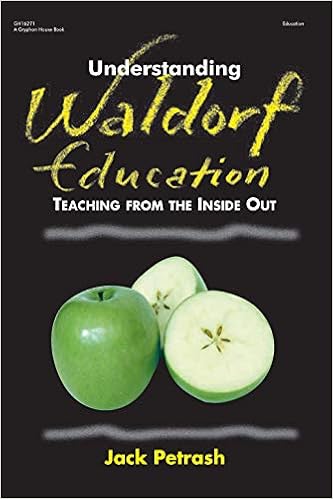
Book from amazon: This is a source I found about the school in Beverly Massachusetts:
Nursery, Pre-K - Grade 8. Integrates a rich curriculum with art, music, movement and outdoor exploration to fully engage our students' intellects and imaginations
Waldorf/">https://waldorfmoraine.org/why-choose-waldorf/
I would love to see more about how this type of school runs with observation. It is interesting how Steiner believed the students in Waldorf school are grouped by temperaments, melancholic, sanguine, phlegmatic and choleric. Steiner considered children's cognitive, emotional and behavioral development interlinked. The students are not grouped by ached emic ability. I also looked this up as it good to know the difference between Waldorf and Montessori. While both Montessori and Waldorf schools believe children need a connection to the environment, they are different in that Montessori focuses on real-life experiences and Waldorf emphasizes the child's imagination and fantasy. Before age seven, Waldorf focuses on imaginary play, learning through imitation and doing., " The overarching goals are to provide young people the basis on which to develop into free morally responsible and integrated individuals, wit the aim of helping your people go into the world to be creative beings." No independents studies have been published as to whether or not Waldorf education achieves this aim.
The Montessori Method of Education, developed by Maria Montessori, is a child-centered educational approach based on scientific observations of children. Montessori's method has been used for over 100 years in many parts of the world. The Montessori method views the child as the one who is naturally eager for knowledge and capable of initiating learning in a supportive, thoughtfully prepared learning environment.
What is the benefit of this model?
The method is child-centered.
mixed-age classrooms
student get a choice of activities
uninterrupted blocks of work time
constructivist or discovery model
work with materials specialized materials developed by Montessori and her collaborators
work materials are often made out of natural, aesthetic materials such as wood rather than plastic.
a thoughtfully prepared environment where materials are organized by subject within reach of the child
materials are the appropriate size for freedom within limits
A trained Montessori teacher who follows the child and is highly experienced in observing the individual child's characteristics, tendencies, innate talents, and abilities.
Abstraction Activity communication Exactness Exploration manipulation of the environment order orientation
free activity in a prepared environment Beauty and harmony,
cleanliness of environment
construction in proportion to the child and her/ his needs
Limitation of materials, so that only material that supports the child's development is for students to order
Nature in the classroom and outside of the classroom.
young children are learning with the absorbent mind, senses, language, culture, and development of concepts.
I would like to read the book the Absorbent mind. Development:
Acquisition of Language: age from birth to 6 years old interest in small objects- from 18 months to 3 years order- from around 1 to 3 years sensory refinement- from birth to around 4 years old social behavior- from around 2 and a half to 4 years.
Montessori came up with the term normalization. Normalization raised from concentration and focus on activity which serves the child's developmental needs, and is characterized by the ability to concentrate as well as spontaneous discipline, continuous and happy work, social sentiments of help and sympathy for others.
The second plane of development extends from around six to twelve years old. During this period, Montessori observed physical and psychological changes in children and developed a classroom environment, lessons, and materials to respond with new characteristics. Montessori studied development and also looked at how the child is construction in adult society. Looking at culture and civilization in adult society.
Do I agree with some parts of this model? Why? I enjoyed working at the Montessori school in Woburn. I liked how the children explored with materials rather than direct instruction and the natural and aesthetic materials. I like how the children interact with their environment feely to pick their own work. I especially liked the practical life area of spooning, pouring and having the kids wash the tables. I still incorporate the children washing the tables into my own classroom transitions. What do I think will not work from this model? Why? It is hard to not want to socialize with children while doing their individual work. They don't have the usual toys in the classroom such as legos.
Would I put my child in that model? Yes, I like how the child explores their individual work on their own.
Is there a way that technology may allow for a blending of these models? No, technology would not fit in this model as the philosophy is based on hands individual activities with real materials.
There are so many incredible options out there if you want to read more about Montessori and early childhood development. Here are 7 best books on the magic of the first years of childhood, curated by the Monti Kids Learning Team.
I would like experience in the infant-toddler Montessori setting or with the older children from 6 to 12. I really liked the preschool Montessori experience and would still like more of that experience too. I would love if another opportunity comes along. I would also like to know more about the elementary peace curriculum.
I feel we incorporate Montessori curriculum beliefs in our early childhood setting even if we do not work in that school setting with teaching sink and float, sandpaper letters and looking at nature. It is interesting that Maria Montessori only studied early childhood and Middle school and high school settings. I do not have Montessori training but would be interested in having the certification someday if my schedule allowed.
It is also interesting how children that go to a Montessori school may show higher achievement.
I found it amazing what the preschoolers were learning with geography and math skills and phonics with the magnet letters when I worked in the preschool classroom.
A flipped classroom is an instructional strategy and a type of blended learning that reverses the traditional learning environment by delivering instructional content, often online, outside of the classroom. It moves activities, including those that may have traditionally been cons
What is the benefit of this model?
It is more learner centered model.
friendly learning spaces.
Eliminates two out of class routines
lesson planning and grading papers.
The student has to be good on learning on their own and being able to teach one self.
The flipped classroom has: video collections, digital slide show(powerpoint)
Students use discussion with teacher/student online communication.
Do I agree with some parts of this model? Yes, I agree with the benefits listed above. I do agree this model may work more at a college level. The students are watching the lectures on courses at home on the computer.
What do I think will not work from this model? Why? I feel students need the personalization in the classroom of being with their teacher to learn and having the social skills with peers.
Would I put my child in that model? No, As I still think children need social skills with peers personally and interaction with their teacher and not just online. Student's fear of teaching oneself, obtaining greater importance of academic work and confusion on topics is discussed.
Is there a way that technology may allow for a blending of these models? Yes, technology is blended into online learning. The students watch online lectures, collaborate in online discussions. It is online as presentations are shown by the teacher.
Here is a video. the source you can go to if you want more information.
For technology in the flipped classroom when reading I learned about https://moodle.org/- open-source learning system children can use for technology hands-on learning. It looks like Beverly middle school uses it
I had to read another classmate's blog to see if I could get help understanding the philosophy. I felt lost as we missed that class due to the power outage.
I didn't catch the part about the student being a creator of their own knowledge rather than an empty tank that needs to fill. This approach looks at what the child already knows and goes from there. Education should be a practice of freedom.
What is the benefit of this model?
I could not find the benefits of this model as I do not understand the philosophy.
Do I agree with some parts of this model? Why? No, I do not believe in this model at all.
What do I think will not work from this model?Why? I do not think anything works in this model but maybe it was because I didn't understand it.
Would I put my child in that model? I don't agree with as the teacher controls all the children's thinking and is very passive but think I am wrong now as the view is students are the cocreators and build student relationships as I learned from Katie McTigue's powerpoint.
Is there a way that technology may allow for a blending of these models
?No, As I do think this model belongs in the classroom but after seeing the idea in Katie's powerpoint presentation I may think differently about the view.
Democratic schooling may be the most radical experiment in education of the past 100 years. In Massachusetts farm country, not far from Boston, a group of about 200 students of all ages are part of a radical experiment. These students don't take any classes they don't specifically ask to have taught.
What is the benefit of this model? The students can learn without classes and can spend their time doing whatever they want. It has the children explore their own interests. The title caught my eye of having No Teachers, no class, No homework. Would you send your kids here? The idea of no homework attracted my interest.
Do I agree with some parts of this model? Why? I disagree with the model as there is not structure and cannot be run by the kids themselves. I feel the children need an adult to help them to learn. The adult needs to assist children to learn the rules of society and scaffold the learning but children can still explore on their own. I do agree with the idea of Gray's book Free to Learn. I like the idea of classrooms having mixed ages to have the young kids learn from the older kids and the older kids learning how to care and nurture. I also agree with the part of the zone of proximal development. I had to relook up the theorist, Vygotsky as a reminder about this theory about what the children can do without help. I agree with the part of education helping children to be themselves and how it helps them in the adult world in their careers.
What do I think will not work from this model? Why? I do not agree with all age mixing and do not think the school can work without teachers.
Would I put my child in that model? No, I feel children need a teacher to learn from. I would also not enroll the children in these schools due to the tuition of &7,8000. If I was aa parent I agree with the worry about children falling behind and the lack of discipline in this school. In the United States, we cannot picture this type of schooling. The quote in the article that sticks out me is, " The fact that in the United States today we have virtually no models of people who have made it without conventional schooling. Consequently, we have a nagging feeling that such schooling, whatever its defects, must be one of the essential ingredients of success." This as an American parent would not believe in this type of model.
Is there a way that technology may allow for a blending of these models? Technology would be in this model as children can do whatever they want. Democratic school may come into society if computer learning takes over the classroom and if there is a balance of children to explore on their own and have the democratic school belief but not have it be the whole way of teaching. I still think the children need to explore on their own but would need to have a teacher online if computers take over as the facilitator. The book is below that caught my interest in learning more about the Democratic classroom.
:
Conclusion
I feel we need a mix of all the curriculum models we studied and a parent can decide which one they believe is best to enroll their child in the school. It depends on the age of technology should be included.